Here is my Final CPE Link:
https://spark.adobe.com/page/hnnZYj6EbM54A/
And a cat pic:

The idea of computers making people dumber is something that is thrown around a lot in my major, with a decent amount of debate. In engineering, much of what we do is now assisted by computers. We can make models of parts with Solidworks, we can see how parts can be most effectively manufactured, and we can even use programs to see how and where stresses concentrate on objects and can pretty accurately model things like fluid flow and structural bending.
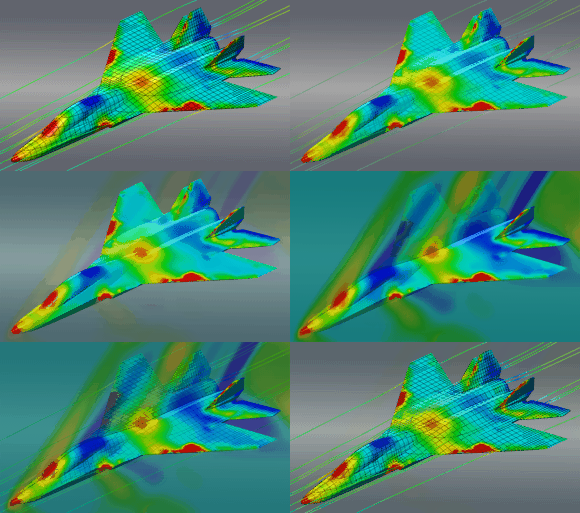


None of these programs make engineers any less intelligent. At the end of the day, it mostly improves efficiency, and makes designing and analysis during projects much more rigorous and complete. The problem that I see in the engineering profession is that while computers may not make engineers dumber, they make it easier for the dumb ones to make work that looks impressive, and can also promote laziness that has severe consequences.
Truth be told the gifs earlier may look impressive, which I wholeheartedly agree with, but that doesn’t mean they are accurate or hard to make. All the hard work is done by the computer and the software. A couple tutorials and a few hours of work can make a person passable at using the software. Given a few months or years and someone can become a pro at using the software and can produce impressive products. These products may ultimately make almost no sense though. The point where using technology as an aid turns into using it as a crutch is when technology starts changing our minds for the worse.
Take for example the FIU bridge collapse that took place a few years ago. Florida International University contracted a footbridge to be built from public transit to its campus so students wouldn’t have to cross a busy stretch of road to get to class. The bid was won by a company that sketched up an innovative single truss design and also met the requirements of needing to build offsite to keep road shutdowns to as short as possible. Ultimately, the bridge collapsed during its assembly resulting in the death of six people.

One of the major factors of this collapse was a heavy reliance on computer simulations. The bridge was created and tested for loading and stresses in a software package but simple hand calculations, which are almost always a must, were never performed to corroborate the software’s stress report. This led to a large and fairly obvious design flaw being overlooked, which resulted in catastrophic failure of the bridge and a tragic loss of life.
Given the proper work and having taken the required precautions, this incident would never have happened. The point Thompson makes repeatedly in his book is that the advancement and integration of technology into society is a net sum positive, and has more potential to cause good and make people smarter. I would wholly agree with those statements, but there should also be a light shined on the necessity to use this technology responsibly and conscientiously, because in some cases it has the great potential to pass shoddy, lazy and unthoughtful work off as being well done and rigorously analyzed.
https://spark.adobe.com/page/hnnZYj6EbM54A/
Here it is in all its glory!!!!
She aint too polished but hopefully you can still give me some feedback
Personalization of our internet and media experiences may be one of the greatest double-edged technological swords that most people obliviously fuel every day. The customization of the content we have presented to us is both a blessing and a curse. The algorithms that create personalization allow for me to get badass Netflix recommendations on documentaries and action movies that I am more than stoked to watch. It leads YouTube to give me suggestions that lead me down a winding rabbit hole of people eating 15,000 calories in one sitting and guys forging razor sharp knive out of wrenches and pasta. That’s right, a knife made from fucking pasta!!!
These beautiful aspects lead me to find things I never knew I needed in my life. They so oddly satisfy my watching habits with things I would never even think of looking up, but wholly enjoy. The unsettling part of this is when I stop to think about why so many of my suggestions are spot on.
The amount of data that google alone has on me from all of my personal searches and countless hours on YouTube has given them what I can only guess is an extremely accurate profile of who I am (not to mention that I have two Gmail accounts that they most assuredly mine info from.) If you ever want to see what google knows about you, just look up Google ad personalization.
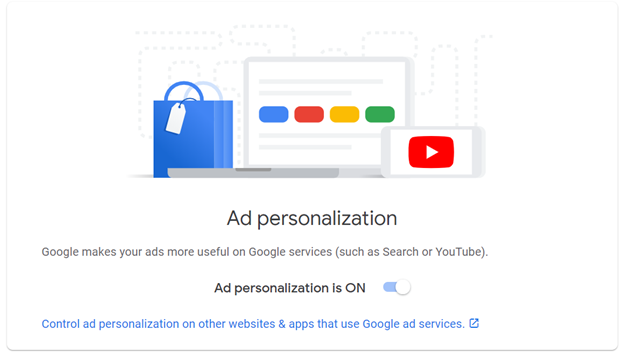
Keeping in mind that I deleted all of my browsing history and cookies less than a week ago, Google still has an insane amount of mostly accurate information on me.

This is the first set of 22 interests of NEARLY 100 interests that google has for me. The age is off by 3 years but other than that, they have a scary accurate collection of my favorite interest from less than a weeks’ worth of information. Some of their guess’s are still off but given a few more weeks I’m sure they could have an extremely specific and almost perfect grasp of my interests.
There is two functions of the algorithms that most of the big internet companies use. The first is to get as much data as possible on you so that they can create the most accurate “profile” for you as possible. The second step is to take your profile, find others that have very similar profiles, and recommend what they watch the most and vice versa. The most fascinating thing is that these recommendations happen automatically purely based off of code that runs on this simple concept. “Person A is similar to Person B, Person A loves Thing A, and Person B loves Thing B, therefore Person A would probably also love Thing B, and Person B would probably love Thing A.
The truly scary part of this scenario isn’t that a computer can teach itself to do this recommending better the longer it does it, overall that’s pretty harmless “code evolution.” The scary part is that whenever we use the internet, we are selling our valuable info for free, in exchange for these free search engines, social media platforms, and so on. And almost instantly, they can start to infer vast amounts of fairly accurate assumptions that only get more refined with time. Many companies have this info and as consumers, were just stuck sitting on our laptops, completely at the mercy of the ethically boundaries that each company sets for itself.
The crux of this matter is just what Pariser mentioned in his book, that the amount of data at our disposal is approaching infinitely vast, and to properly sift through it to find what we will like best, we need these filters and algorithms to help us. The catch 22 of this need is that we are also giving up a lot of our personal information with the hope that it won’t be used negatively against us, and whether it is intentional or not sometimes these algorithms can sometimes hide the things we don’t necessarily want to see, even though they may be things we need to see.
The reading for this week had a lot of complexity and nuances to its arguments, but there were also some places where I believe it lacked. I understand it was an essay that exists to primarily highlight the pros and cons of digital reading, and how that may negatively or positively affect how much people read and their overall ability to comprehend it. This is all fine and dandy but it seemed a bit pessimistic for my taste so I wanted to focus primarily on the pros of being a literate person who loves reading in the digital age.

Now more than ever we have access to vast amounts of literature, in several different forms, very often completely free. I firmly believe that reading more inherently leads to, at the very least, greater knowledge for the reader, and more than likely leads to being a better reader as well. And oh boy, we are in the hay day of the free information age. Using a cell phone or computer leads to endless possibilities for accessing reading materials.
Personally, I use MontanaLibrary2Go to get access to an insane amount of free digital books and audiobooks (which I very firmly consider reading.) It provides access 2 weeks at a time to a huge digital library of books, with very little to no wait for most books.
Additionally, there is also Project Guttenberg, which tries to collect digital copies of all works that have entered the public domain and provides them free of charge. There is also LibraVox as another great place online, and it is essentially Project Guttenberg for audiobooks.


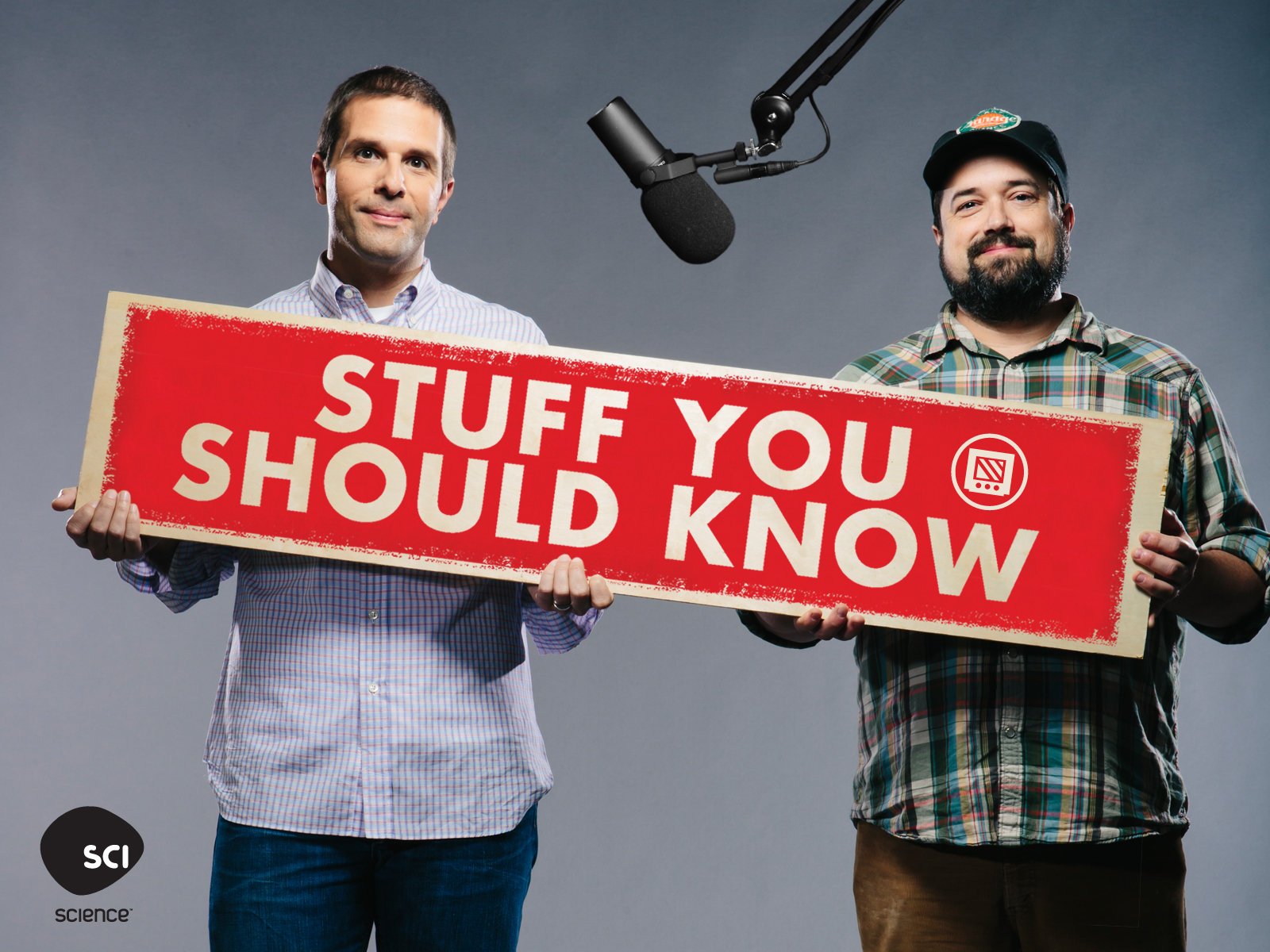
Beyond wider access to published works, we are also in the Golden Age of podcasts. Podcasts are a great way to learn about a wide arrange of topics, with shows like Stuff You Should Know covering everything from Betsy Ross to Ping Pong, each providing an informative and fun listening experience (at least for a nerd like me.)
There are also more niche podcasts like ones for learning a new language, or even one that goes through the Harry Potter series one chapter per episode and views it through different principles as if it were a Holy text.
Yes, I’m not joking, its great and I stand by it as a Potterhead one hundred percent.

The vast amounts of information at our disposal doesn’t end there! We as humans with internet access also have the ability to read unpublished works, ranging from people who are writing drafts and want other authors opinions (http://figment.com/) to people who have written stories or “fan fiction” that take place in their favorite literary universes, only some of which (Not All!…) is adult material and mildly creepy.
Our resources today are vast when it comes to providing free reading material. Better access ultimately leads to those who want to read being able to do so easier and cheaper than any point in history. The tradeoff is that there is also a vast amount of other digital based media that is vying for our attention. I don’t subscribe to the idea that digital reading is less impactful or possibly even “worse” for us than physical text as Bauerlein argues in “The Dumbest Generation.” I will concede though that our digital world offers plenty of alternatives that take less effort to enjoy than reading. This I feel is the crux of the argument that was trying to be made. We have unparalleled access to digital literature, but the true problem isn’t with physical vs digital reading; it’s simply with choosing to read in the first place.
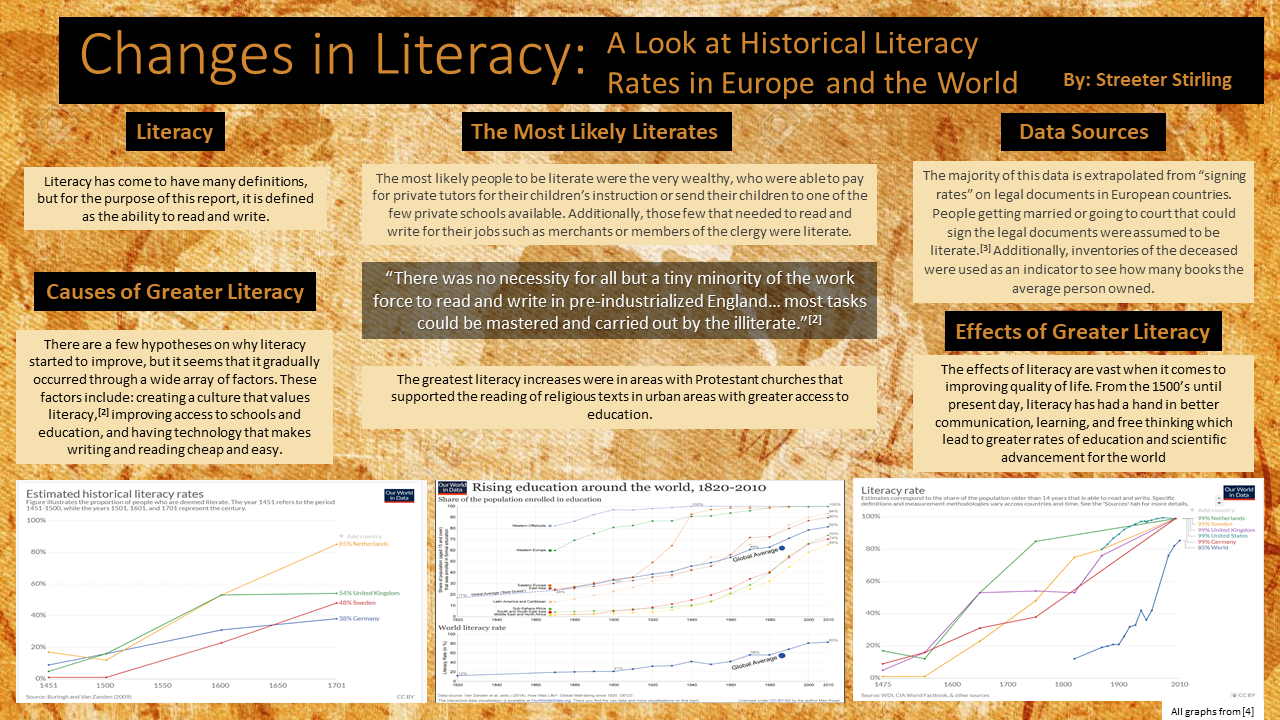
Wow was this was a much tougher assignment than I thought it would be! As a person with an engineering background, I have done my fair share of research, technical reports, and have even made and presented posters just like this on topics related to material strength and welds but something about this made it so much more difficult. If I had to guess why, I would say that it is because it seems thins topic lends itself so much better to a technical report or essay that a poster.
I am comfortable in relating data through graphs but the graphs in this case represent such a small aspect of the story that it was difficult to not flood the page with writing, which I may have unfortunately done. There are so many nuances to the history of literacy and why it was so low before 500 years ago and why it started to improve that I feel this was just not the right topic for me to cover with the poster. On the flip side, it makes me that much more excited for the CPE because I know that everything that I have learned so far about literacy and how that information should be presented aligns perfectly with the format of the CPE.
Another hard aspect to grapple with was sizing. I used PowerPoint as it is quick and intuitive, but the problem I had to confront was what scale is this PowerPoint actually? It made it tricky because many of the examples were fairly easy to read on a computer screen, and that is how we are presenting these so it had to lie somewhere between a full sized printed research poster and the online examples we were provided with. Additionally, I felt that a lot of my poster’s space was taken up by my three graphs. The whole point of the poster is to present this data, and the graphs certainly could not have been made smaller due to the amount of information each presented. Nevertheless, part of me feels pained by just how much space they take up as I feel I could have formatted the poster a bit better with more room.
Finally, the greatest challenge of them all, I was forced to face the soul crushing fact that I am in fact, not a graphic designer in the least. There is a reason why I wear a t-shirt and jeans with boots every day in winter and why deep down I truly am an engineer. I hold on firmly onto whatever is most logical to do, which often is the easy simple design the gets the point home without too much pizazz to get in the way, which is the one area that I did worst in. I most definitely could have doubled the amount of time I spent on this project by making things look prettier, but that’s not really me. I would rather spend that saved time learning more about literacy, reading fascinating articles on the cultural shifts that created literate humans, and finding more information on how technology has advanced literacy. I am much more a researcher and writer than I am a design guru, and for better or worse I enjoy constructing a well-supported argument more than I enjoy dressing up a half-baked one.
Overall, this was a hard assignment not for all the reasons I was worried about, but because of that one unexpected one I never expected. On the bright side, I am even more excited to tackle the CPE and share all the fascinating material I have found in a better-suited format that will hopefully be much more enjoyable for both reader and writer.
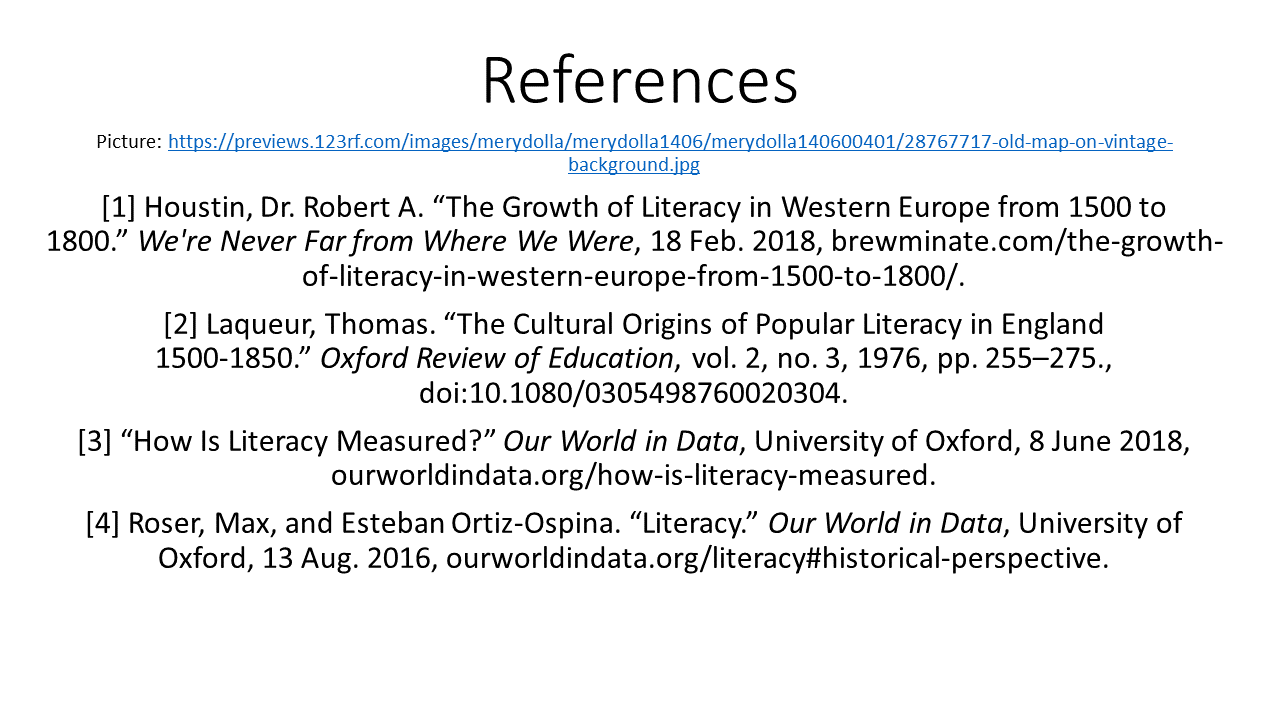
When reading the chapter on color in McCloud’s “Understanding Comics,” my mind went instantly to all the examples of colored comics that I see on a nearly daily basis.
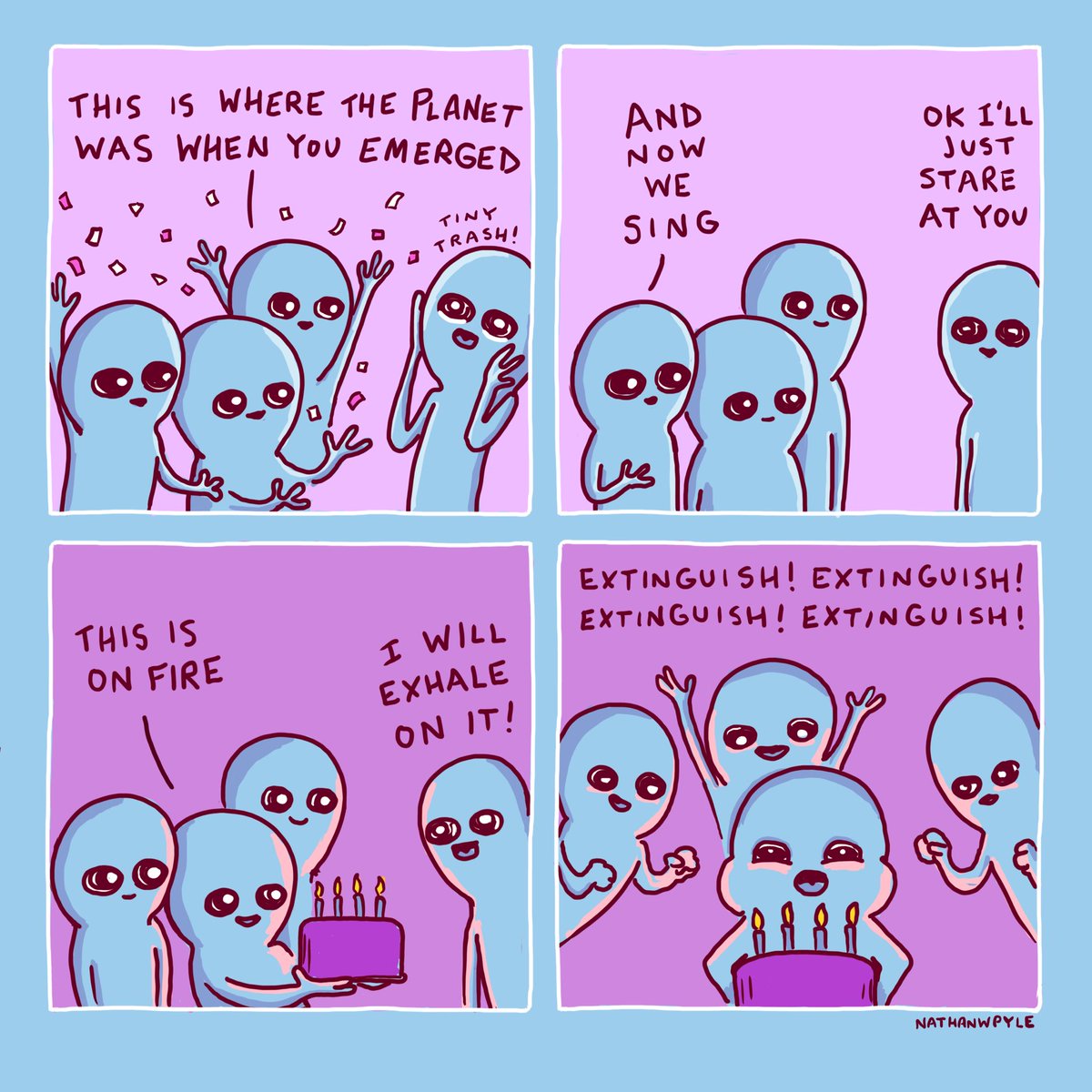

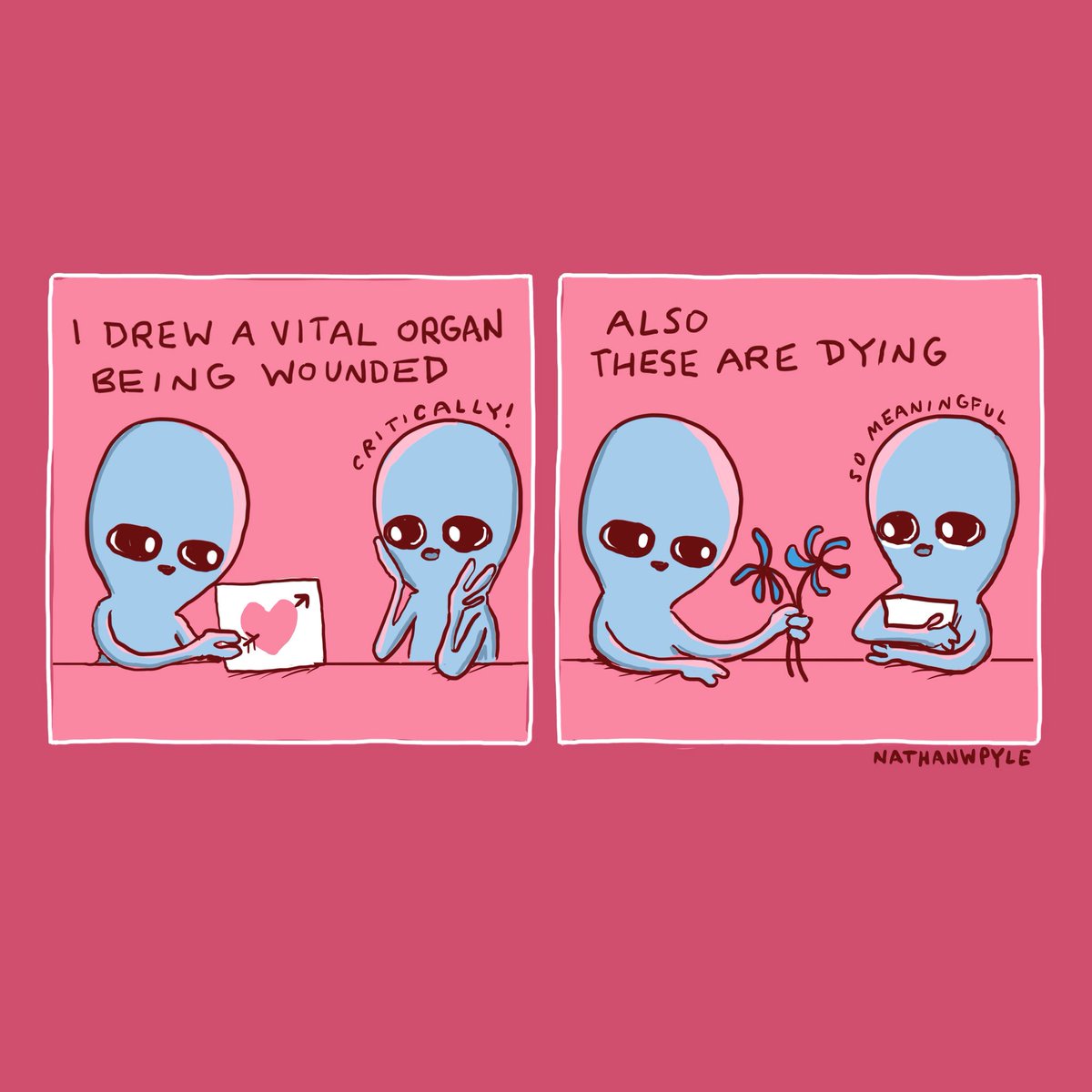
The barrier to entry for comic making has become near zero with access to the internet and a few other apps, all of which can be accessed for free at various places, just about anyone can be a comic writer. And not only a comic writer, but one that writes their comics in full-fledged and unadulterated

Most people’s access to comics is probably through their phones on one social media site or another, or maybe specifically through a comic focused web source. This concept of a digital comic wasn’t even remotely around when our boy Scott wrote his book but some parts of chapter 8, especially when mentioning the “cost of color” felt particularly dated. The discussion on needing to master black and white drawing techniques before mastering color is timeless sage wisdom akin to any other “Wax on Wax off” master the basics commentary, which is going to be inherently true for any art form.
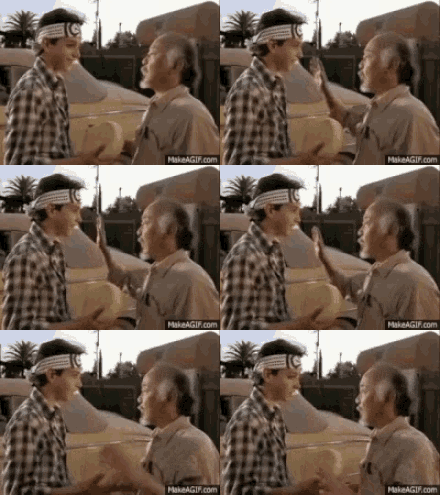
Understanding the origin of comic style and why primary colors are so common was also fascinating, but when it comes to the cost of comics, for many people that just isn’t a large factor anymore.

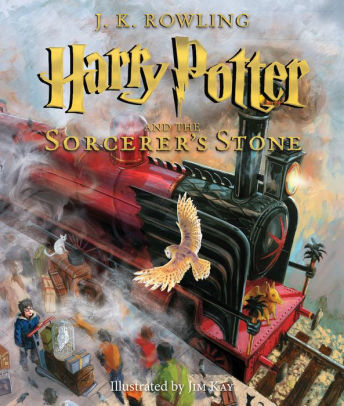
When it comes to printing in color, the cost has dropped drastically due to modern technology and the inherent cost cutting that comes with technological advancement and automation. I mean, they even have the Harry Potter books fully illustrated and in color now!
On top of the cost of printing, it would be a stretch to say that many people beside diehard fans and collectors even buy physical comics anymore. With the existence of apps like the Marvel Unlimited and DC All Access, we can now read virtually any comic digitally, and with the prevalence of the entirely digital comic strip, the number of physically printed comics is falling, and the reasons to limit color use is going with it.

That is kind of the where we are in the current state of comics, authors are no longer truly burdened with needing to think about printing cost and other problems when writing, and can but more thought into what they want to create, what style they are chasing, or what art they want to show the world.
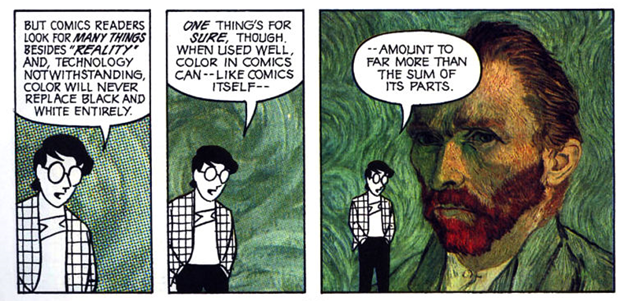
This is where it all circles back to form and where we can maybe argue that comics may be approaching the validity that many other mediums have. With all things becoming digital, and the cost of production for comics being arguably less than many other mediums like journalism and television, technology may ultimately be what evens the playing field. The combination of low cost, the ability to more easily make their intentioned form come to life, and being restricted only by the form and styles they want to utilize, comic authors may just be approaching the Comic Renaissance.
Throughout Wysocki’s “The Sticky Embrace of Beauty” chapter in “Writing New Media,” I was time and time again, confronted with the topic of objectification of people, bodies, and the definition of “beauty” as something that exists as a form and can be determined due to an agreed-upon standard set the majority. The focus of this chapter was placed on how the picture of this woman’s mostly nude body was used as a tool to sell a product.

Her form was “tastefully” depicted with proper lighting, proper word placement, and an even contrast and color use. This created an ad that was technically pleasing as far as a graphic designer would be concerned and visually pleasing as far as the common populace who enjoys naked people would be concerned.
As I am your typical (very) rural born, straight white male, I won’t pretend to be confident in tackling the issue of how media objectifies women for money, shock value, and the greater effect that this has on the sexualization and objectification of women, and how that leads to strict standards of beauty that many feel they can’t achieve. What I can do though, is relate this to an area that I am very familiar with, which is the unethical use of men in fitness-focused in multi-media advertisements in order to sell products.
One of the biggest problems with the male fitness industry, whether it is general weight loss, muscle building, becoming a better athlete, etc. is the use of what I would define as “unachievable body standards.” Many of these companies are selling products including: workout programs, diet plans, meal supplements, workout supplements, workout equipment or even pills/shakes/powders/Chinese dried rhino dung that is promised to get you ripped and lean with no effort at all are shams of companies with no ethics.


These companies sell products that are crap and they all have a hand in perpetuating extremely harmful lies. They claim that you NEED to have something other than a healthy diet that puts you in a caloric deficit to lose weight (yes, it is just that easy). They claim that to get “ripped” and have a six-pack you NEED something other than a low body fat percentage and workout regularly (yes it is just that easy.)

A large problem here is with these companies choice of models for their advertisements. The majority of these companies use men that are very clearly using steroids or some other performance-enhancing drug and passing it off as these bodies are all natural and due to their product alone.

Besides the obvious ethical problem with using lies to sell products that don’t work, the use of these models is harmful in many other ways as well. First, it sets a beauty standard for men that is simply unattainable. Unless you are on gear (the common term of muscle building drugs) many of these features such as large rounded upper trapezius muscles, and capped shoulders are impossible to get due to testosterone production among many other factors.
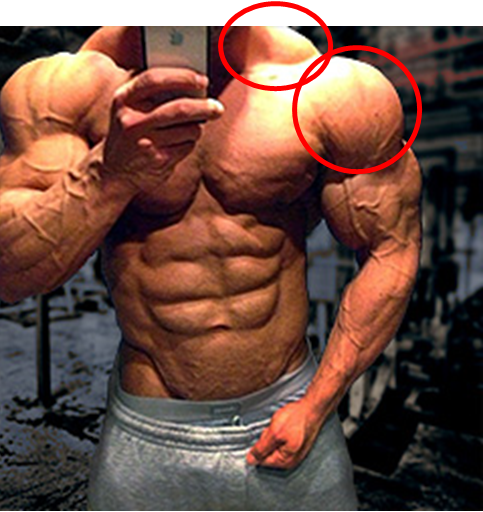
These ads also make it seem as if there is one ideal physique for men, the massive dude with huge muscles and crazy abs. While striving to have a realistic version of this look isn’t bad, it shouldn’t be THE standard of male fitness, simply because everyone is different and at the end of the day, every person should strive to be healthy and happy as opposed to chasing an unhealthy lie.
The fitness industry, like many other industries, is filled with shady behavior and unethical advertising focused on men and women alike. The problem with these ads isn’t the use of shirtless fit men or women. The true problem with these ads is the blatant immoral lies propagated by these ads and the implicit statement that people’s beauty and health standards should all be based off achieving one “perfect” human form, and not be based on the intangible qualities of true health and happiness.
 Streeter's Generic Blog